Ashwin Rajan
Your face is your ultimate asset now.
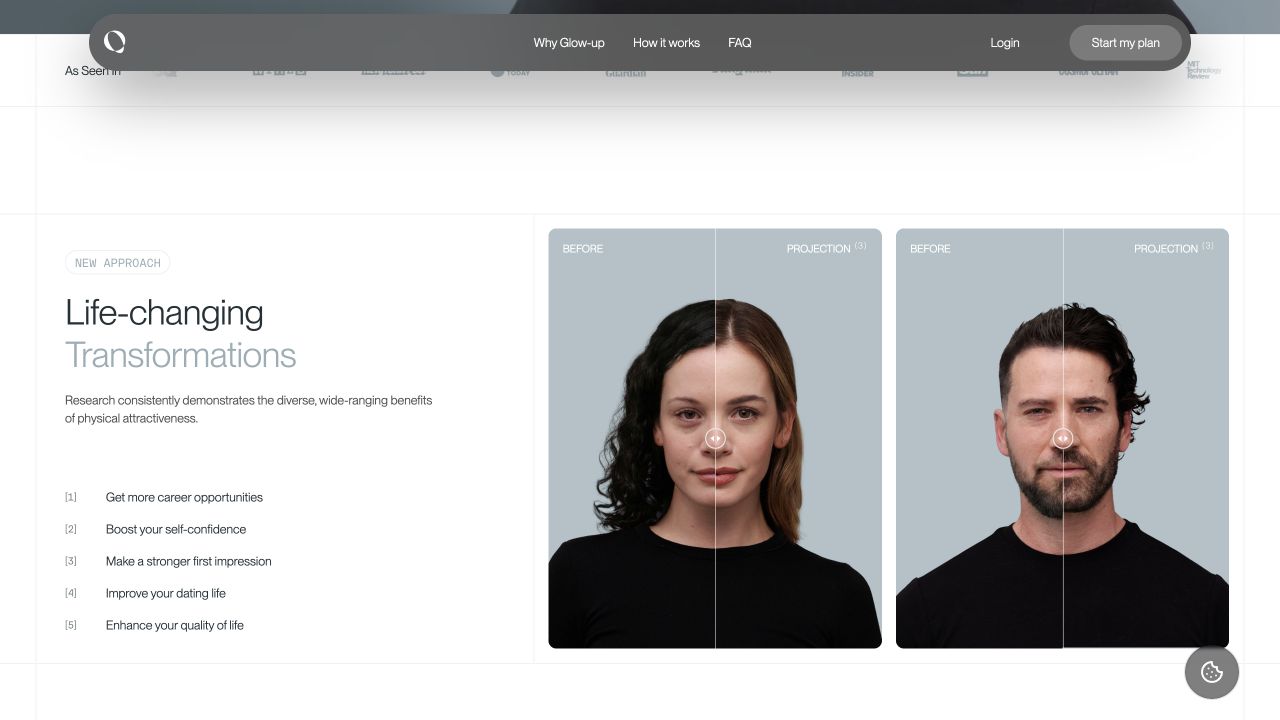
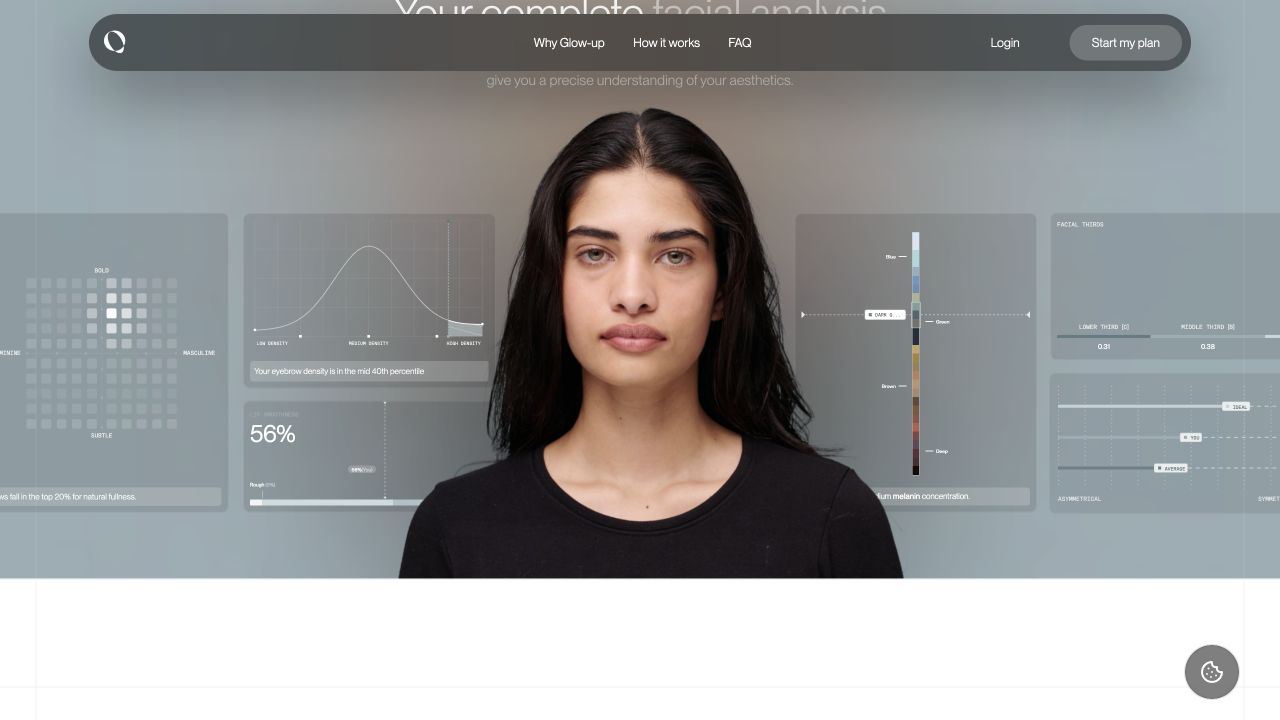
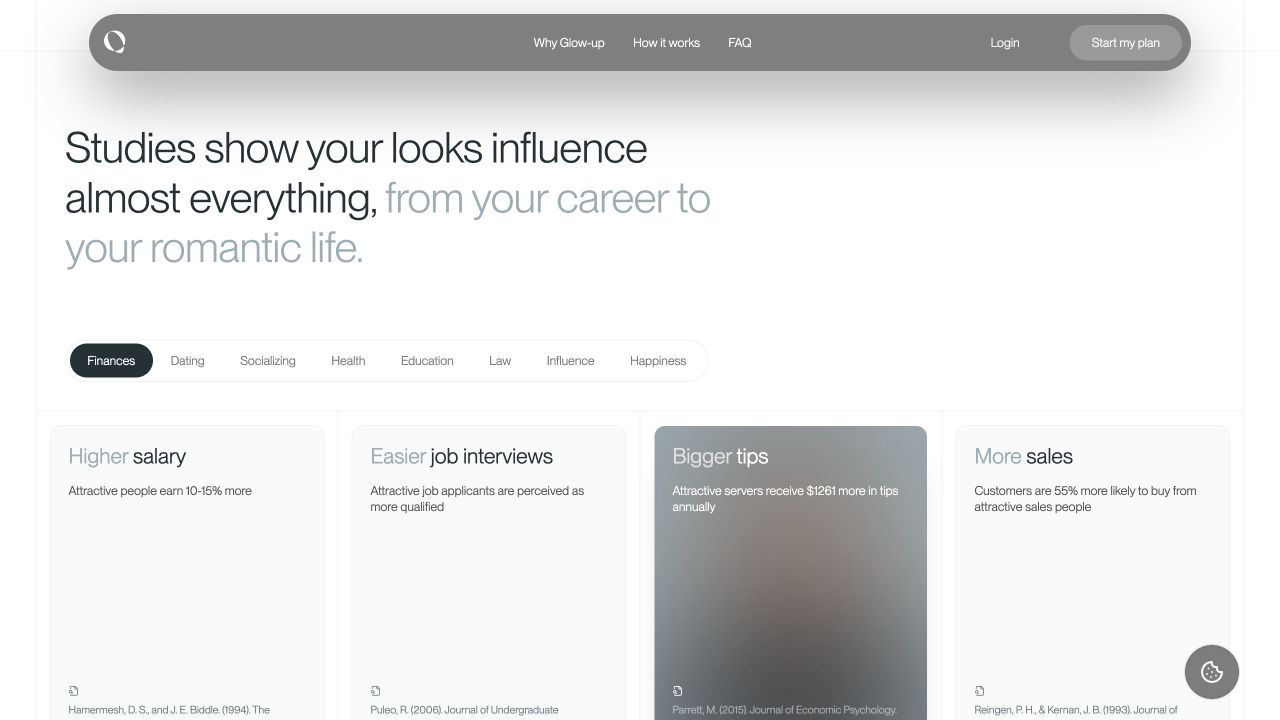
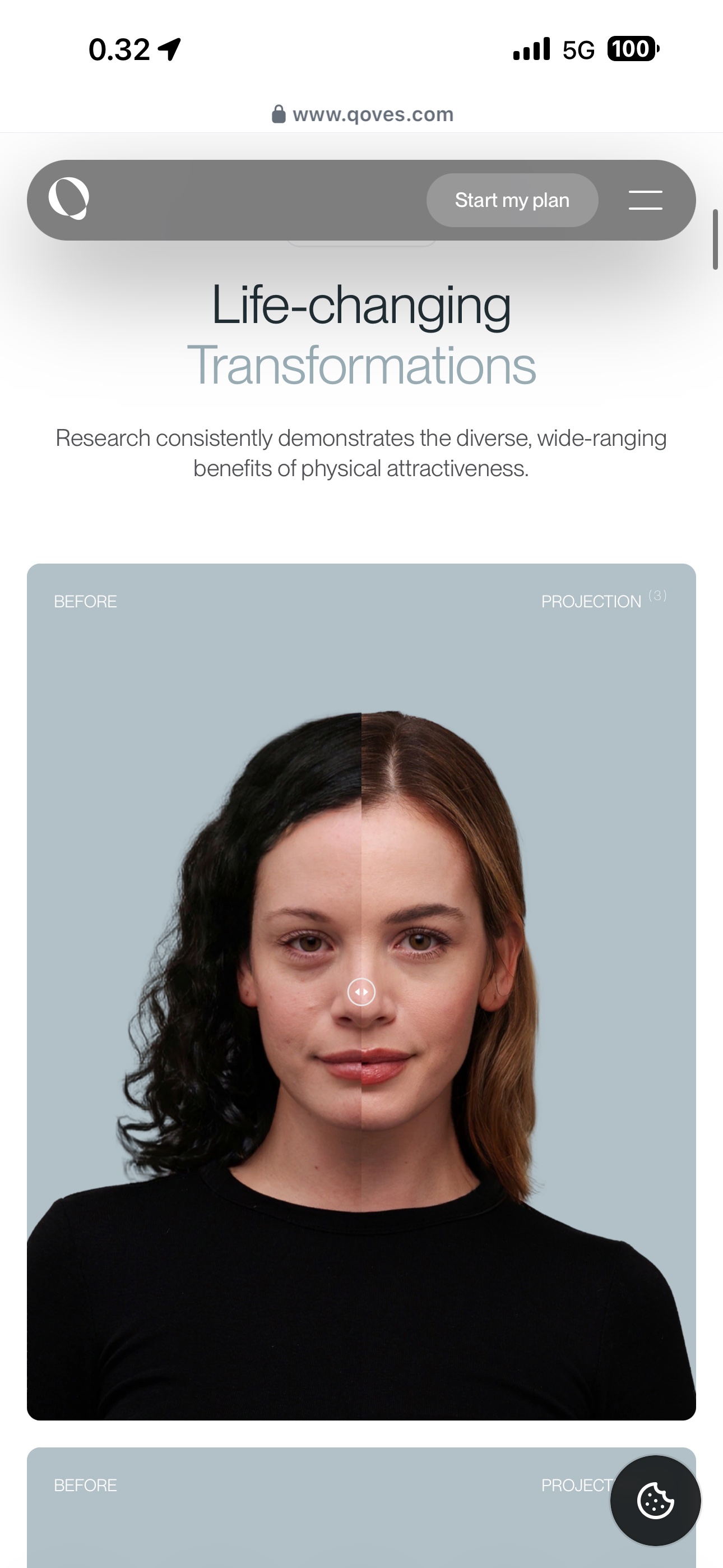
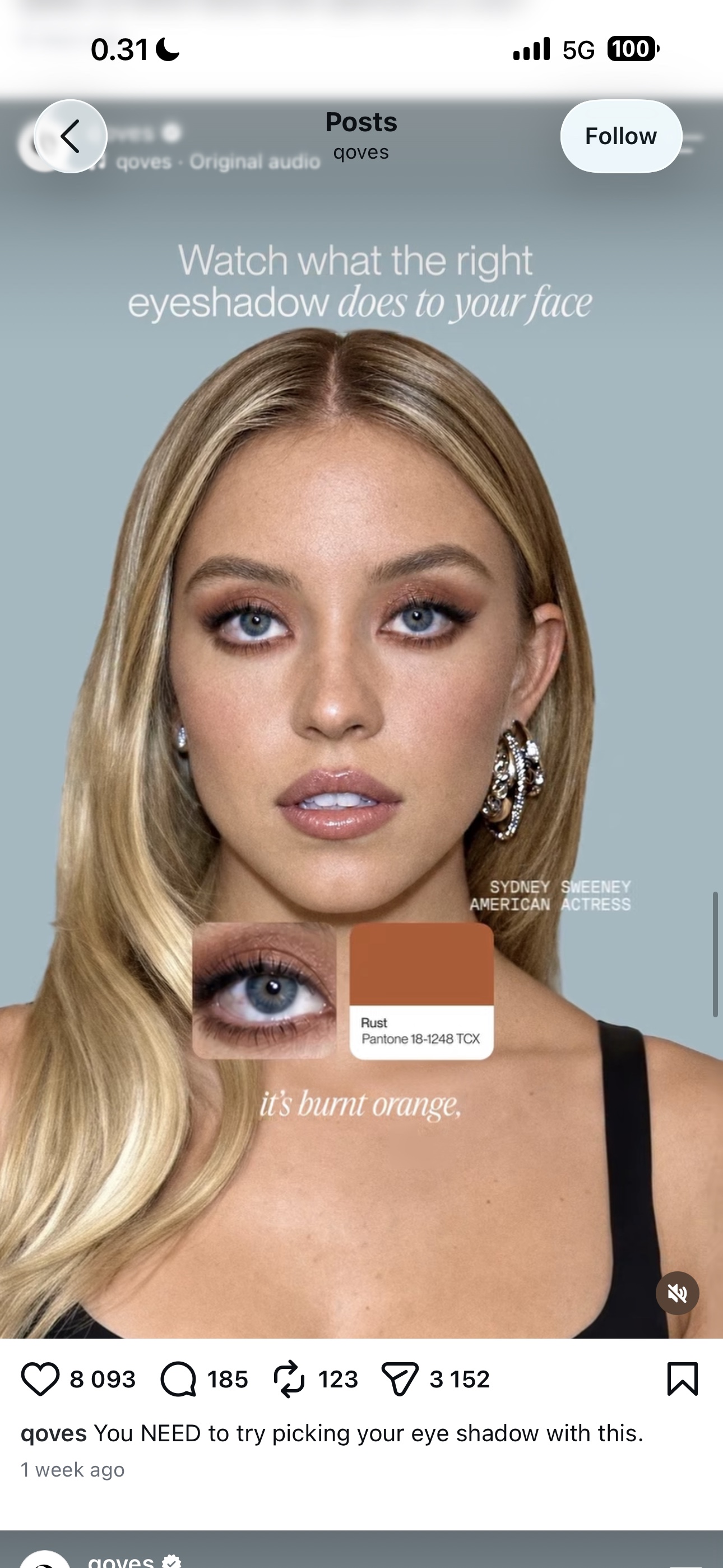
I saw an ad for something called QOVES. The name sounds like gibberish. The website is immaculate. You send them photos of your face, they assess it, and you get a plan and a picture of what you could look like if you followed it. I still find the proposition bizarre. I still want to see the picture. QOVES
First we counted steps. Then we started checking how well we slept before deciding how tired we felt. Now the quantified self has reached the face. What I find interesting about #looksmaxing is how quickly it went from a word I associated with men on obscure forums to something I could imagine almost anyone doing. Influencers got us used to watching someone turn their appearance into a livelihood. QOVES gives the rest of us a plan. The company says it has millions of followers, and the founder of Umax has shown off millions in App Store sales. There’s a business in getting people to look at their own faces for a little longer. QOVES press page · Interview with the Umax founder
Then I read Ellen Atlanta’s piece on #beautyburnout. One woman talks about the cycle of braids, nails and lashes growing out, always something due. It made me think about who gets to discover all this as a hobby and who’s been doing it for years just to look presentable at work. The market can open up to everyone while the cost of opting out stays very different.
And now there’s #loweffortbeauty. Kiera McMillan writes about glamour spells on Etsy, beauty audios you can play in your sleep, and a woman who says she manifested a nose job. I laughed at “quantum nose job.” Then I thought about how good the idea must sound if you’re sick of spending your evenings doing maintenance. You can go to sleep and let the audio do it. You still get to imagine waking up with a different nose.
I keep coming back to the assetification of the self. In that story about Bay Area matchmakers whose female Chinese and Chinese American clients were asking to meet men working in AI, someone’s stock options can enter the room before they do. And then there are young men building a wardrobe of fragrances. I still like the idea of choosing how I want to smell on a Tuesday. I’m less sure I want Tuesday to become another thing I could be doing better.
Andy Clark calls us natural-born cyborgs. We’re good at making things outside ourselves part of how we think. I wonder what happens when one of those things is a picture of your future face. You could start by asking the tool how to get the look you want and end up asking it what look you should want in the first place. Andy Clark, Natural-Born Cyborgs
Maybe that’s a kind of #identitystratification. Who can pay to keep changing? Who gets to look like they never tried? Who can afford to stop? I keep reaching for the word speciation, which is probably too big a word for what I’m seeing. But I do wonder how far apart our ways of being human can get when some of us learn to see ourselves through these tools from the time we’re young. What does an ordinary photograph of your face look like after ten years of seeing what it could have been?
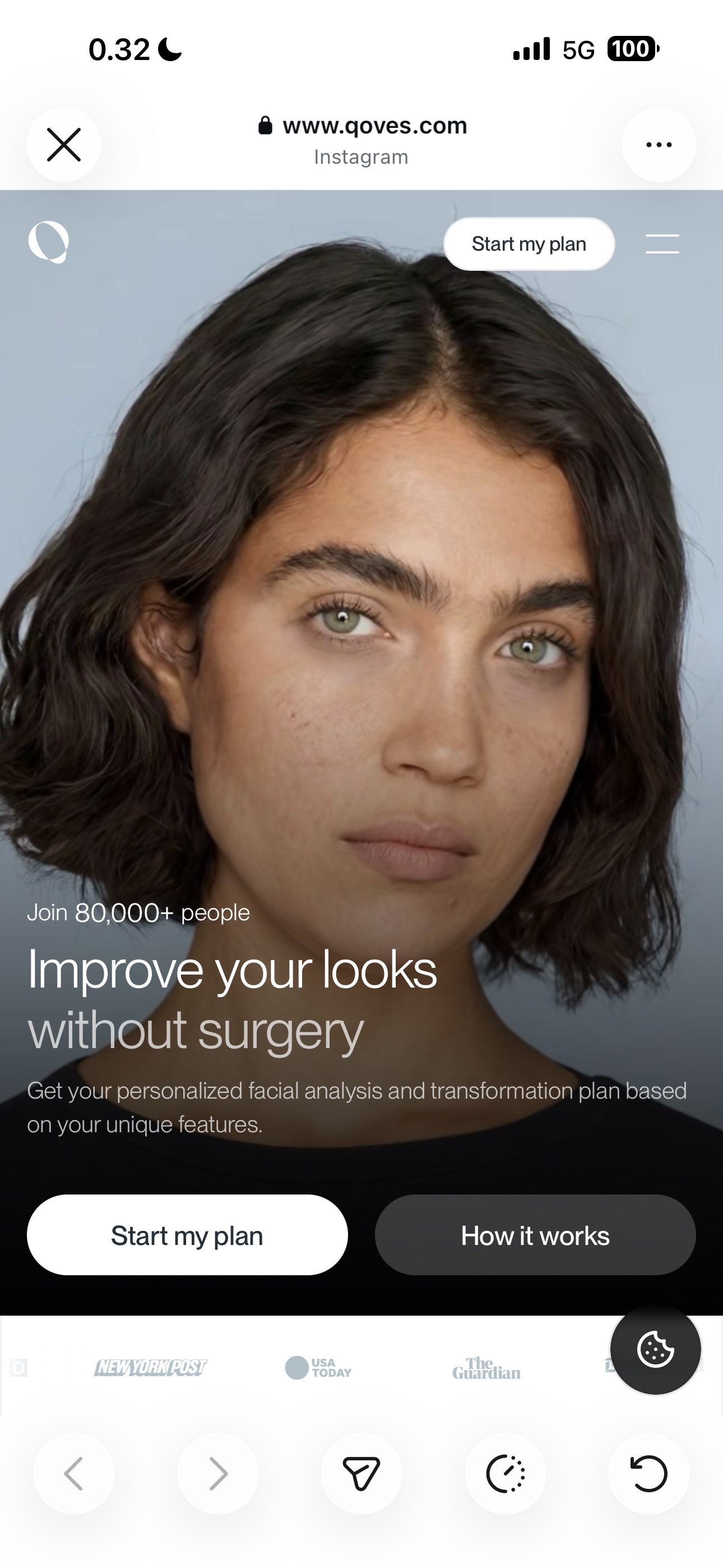
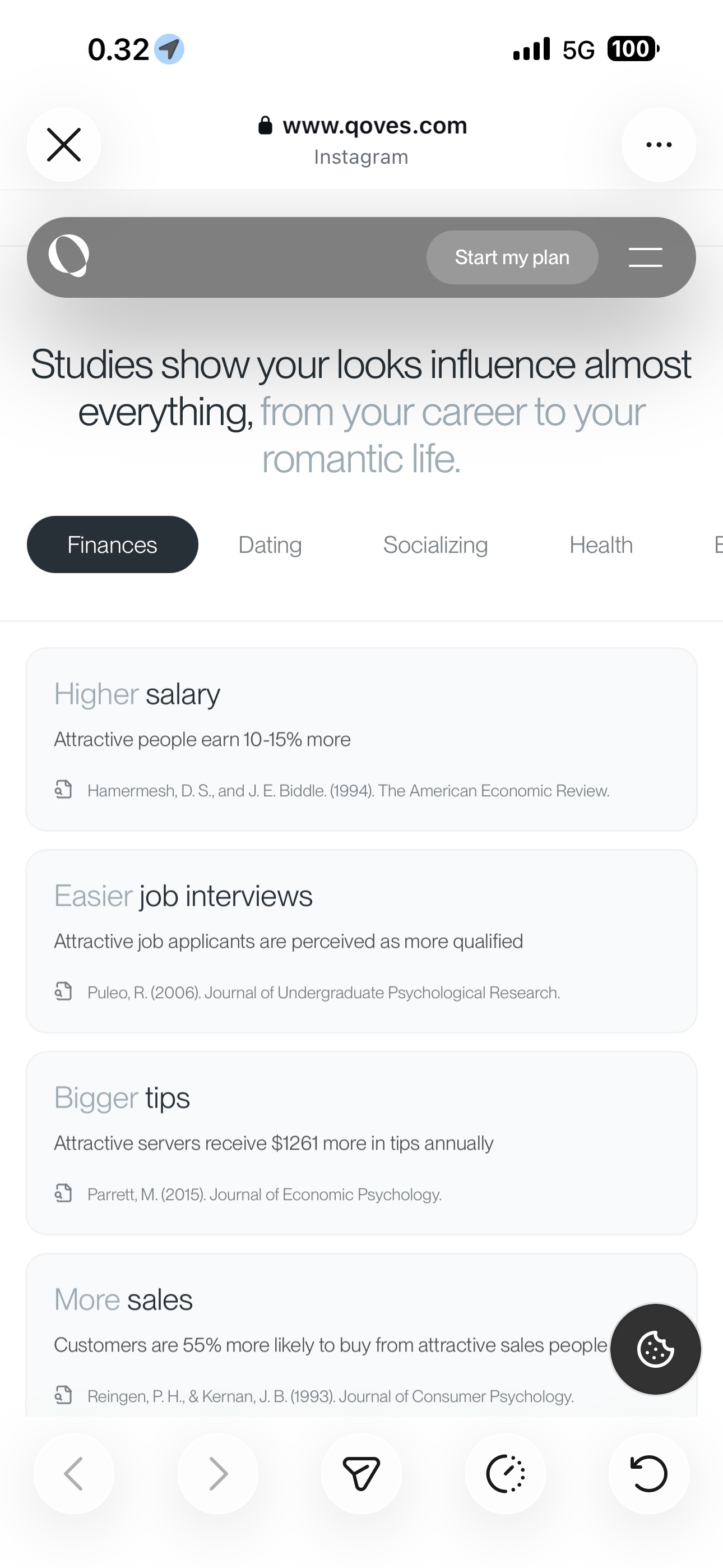
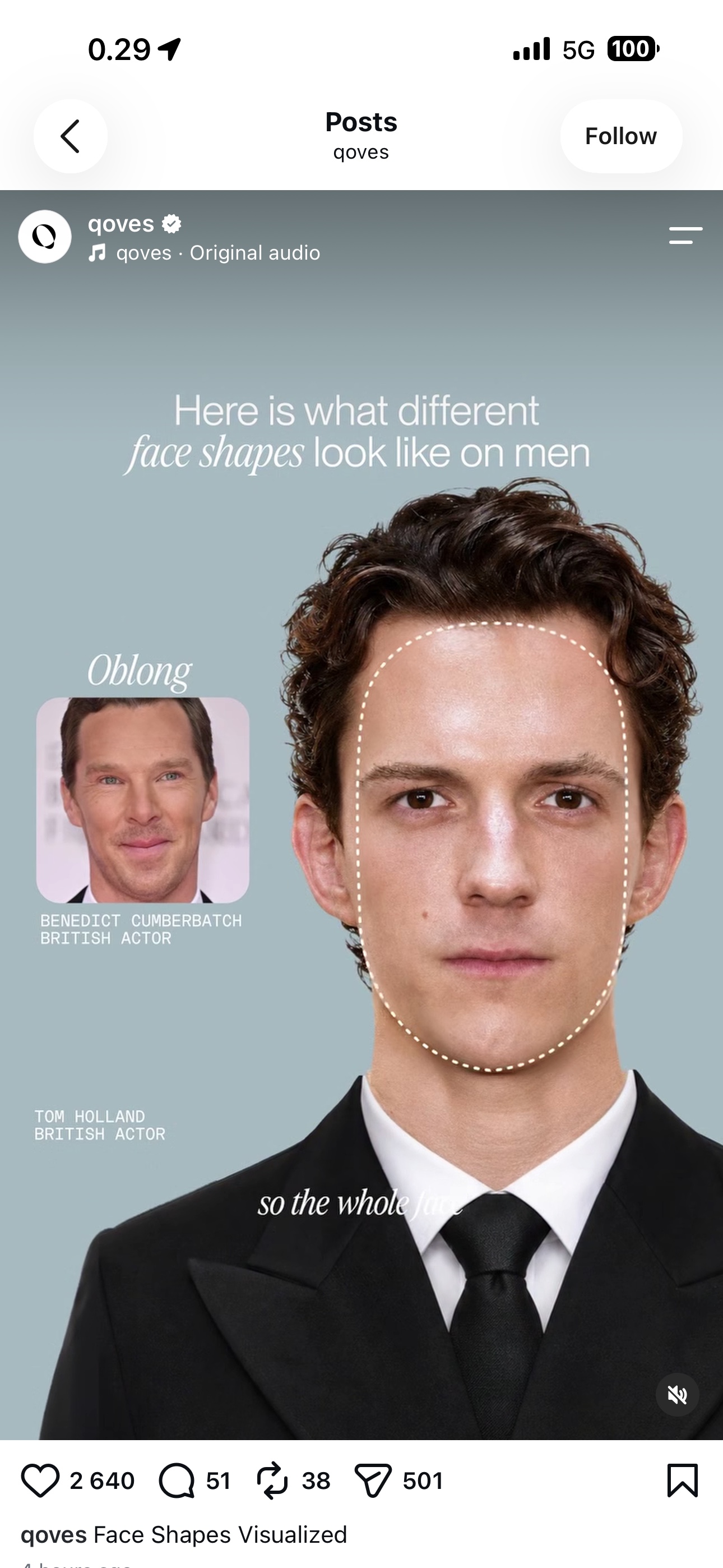
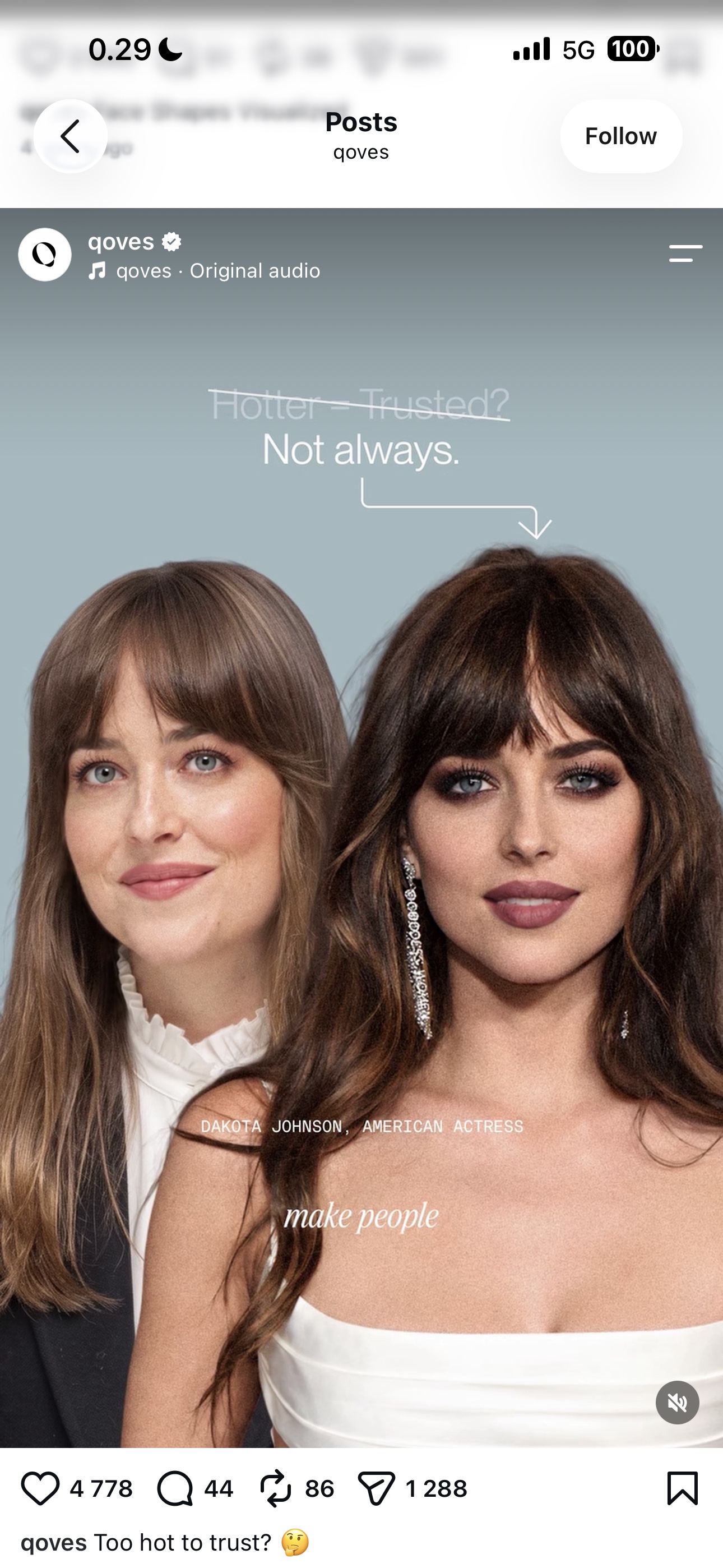
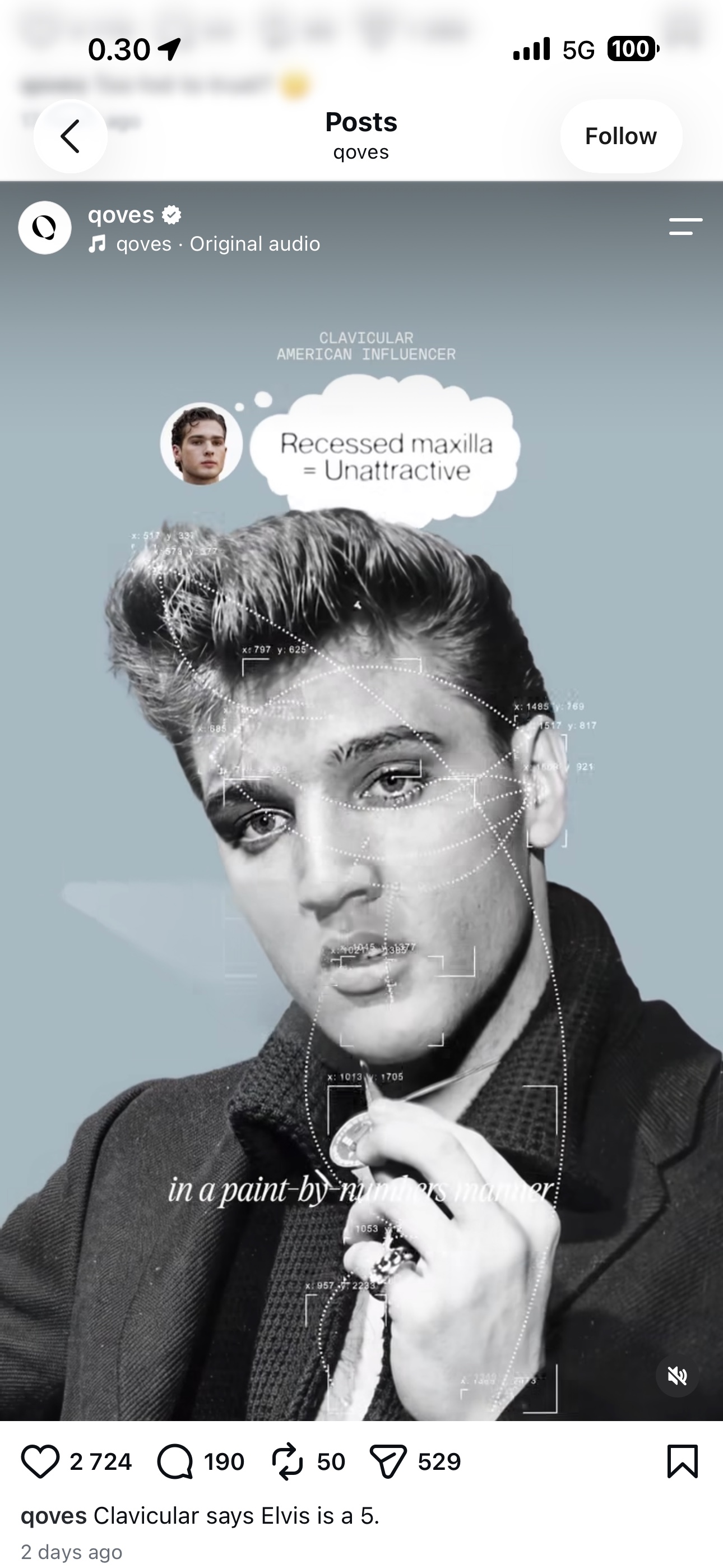
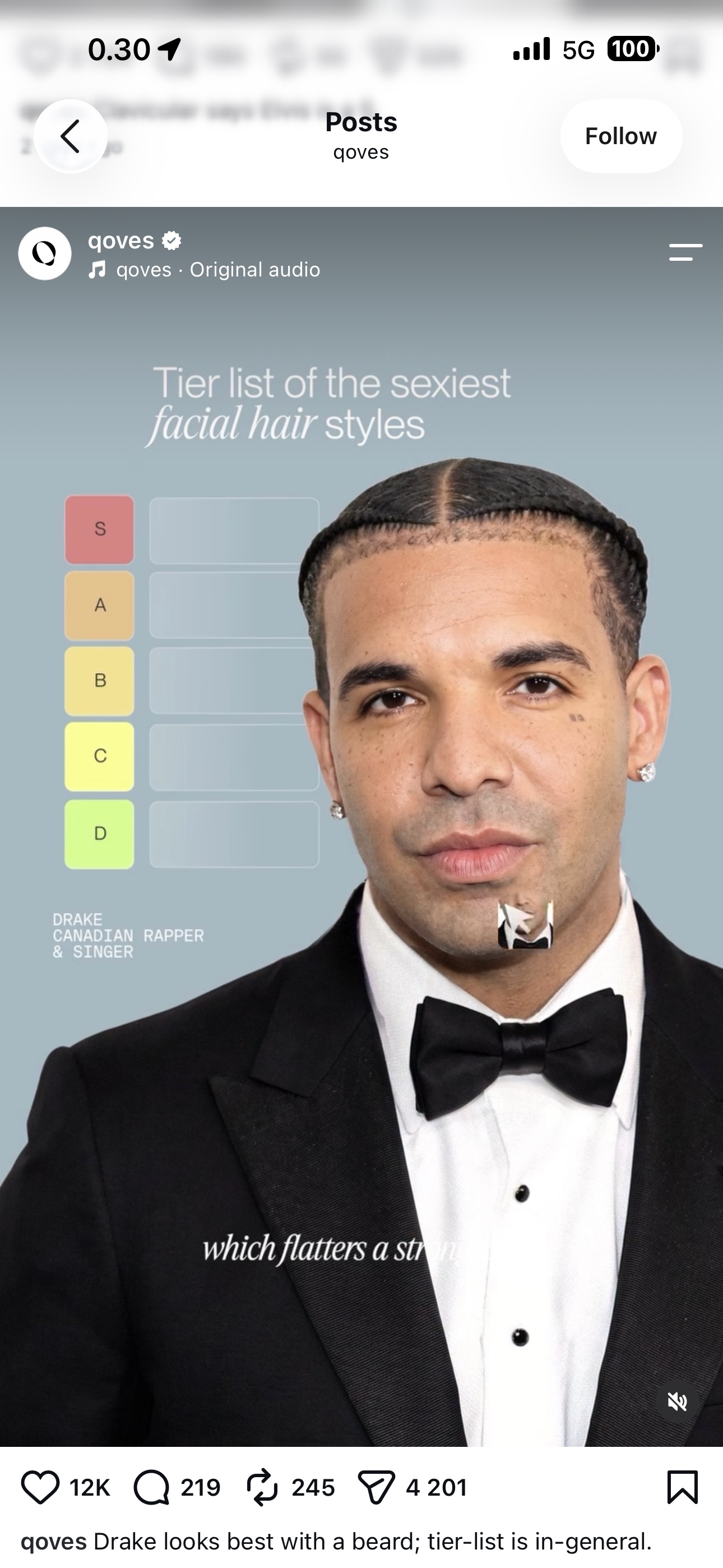
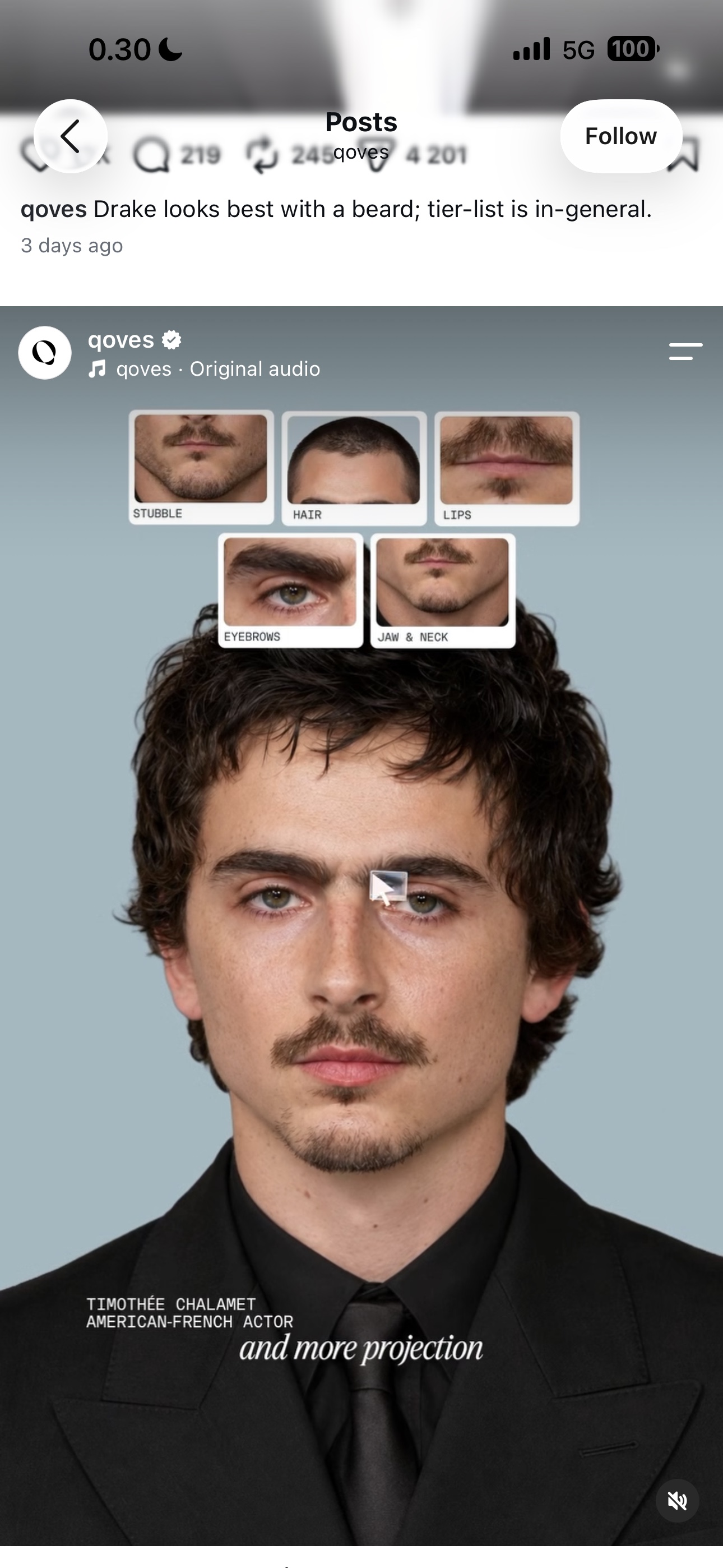
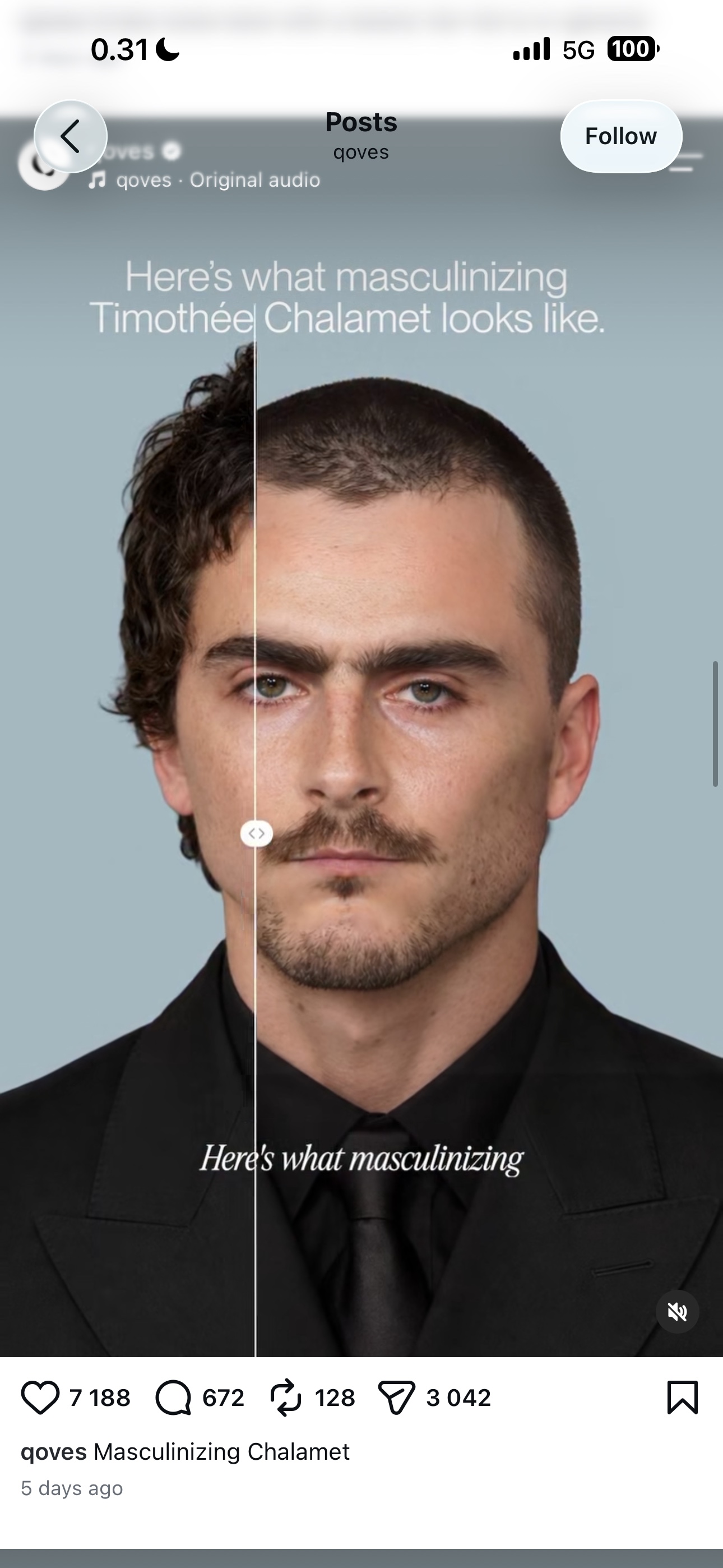
I’ve put some screenshots from QOVES’s mobile site and Instagram feed below. I find them endlessly fascinating. In a society of the spectacle, what could be more interesting than the face? A little stubble, a different brow, a shade of eyeshadow. I keep thinking I’ve seen the point and then I look at another one. This is definitely an app to watch.
Journal tags #looksmaxing #beautyburnout #loweffortbeauty #identitystratification