Model-generated images / From photograph through model
Hermit
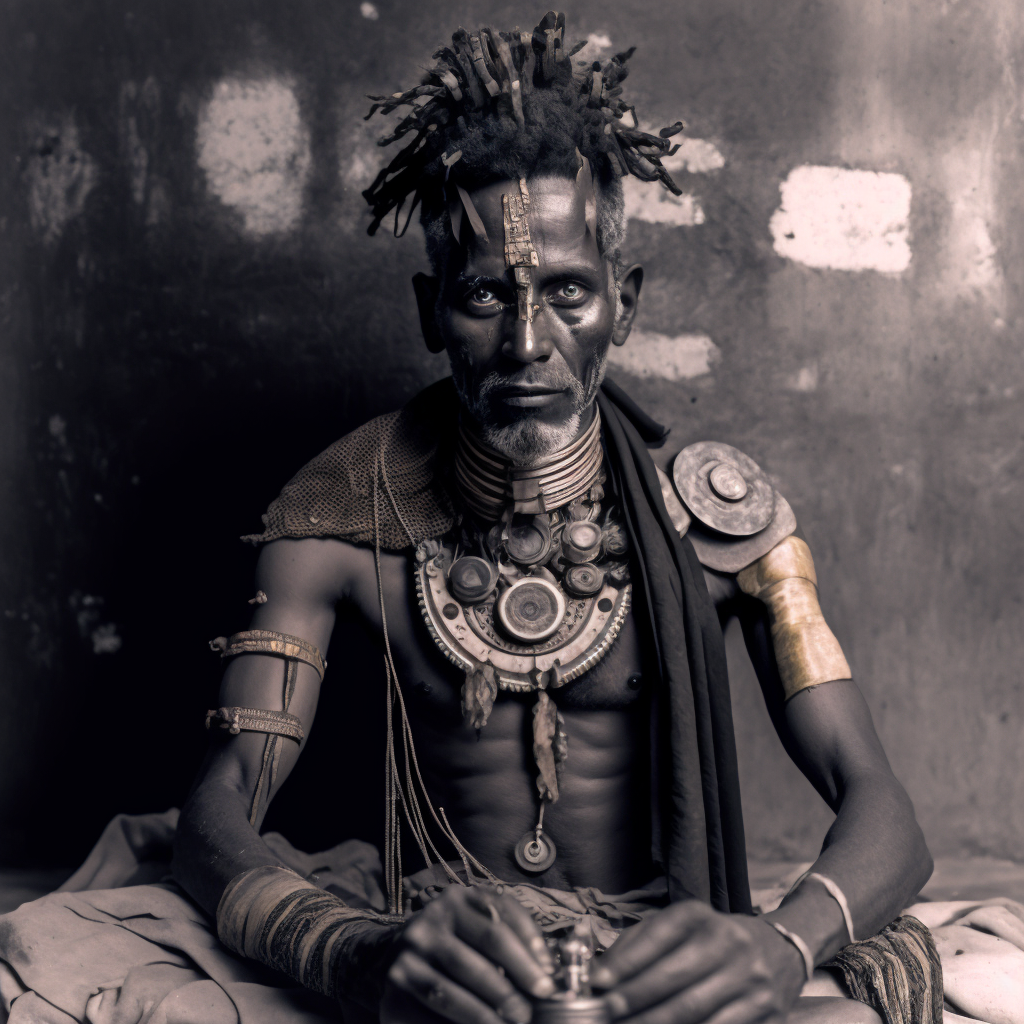
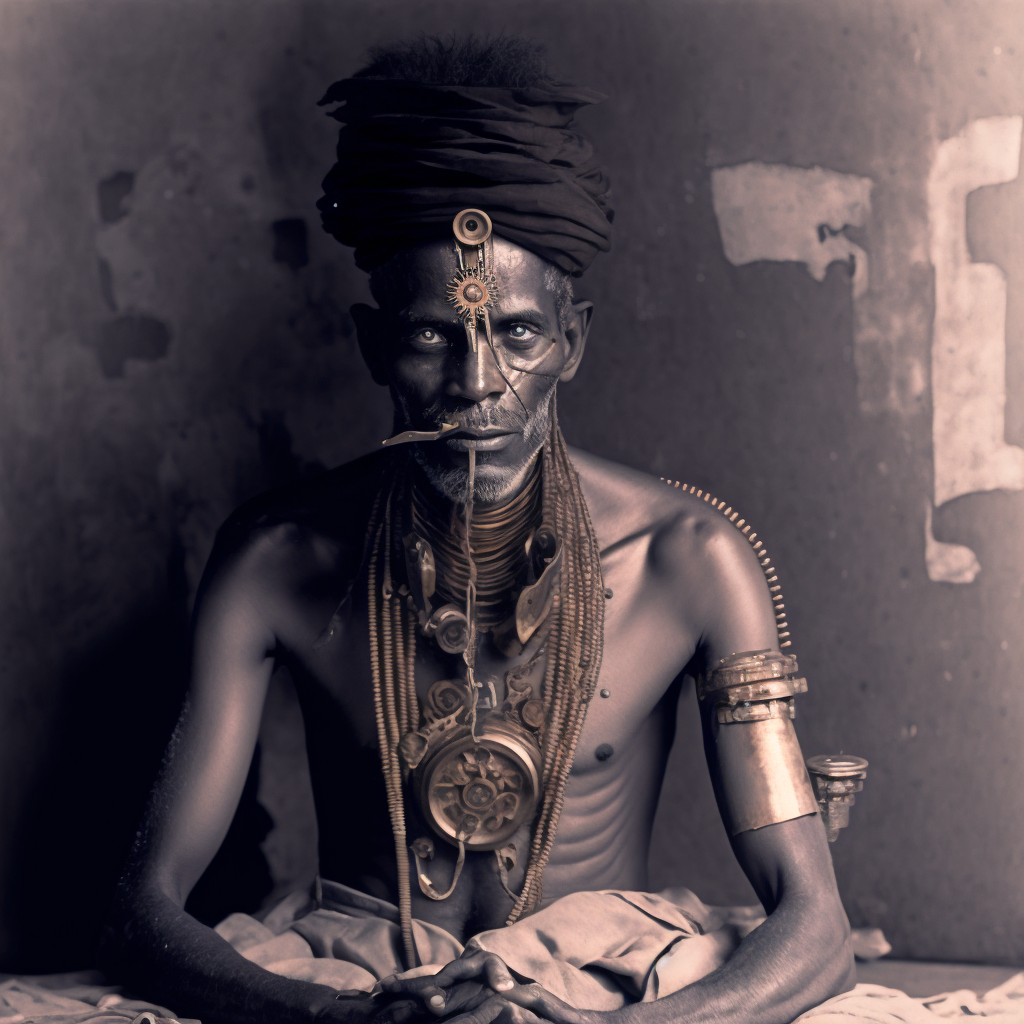
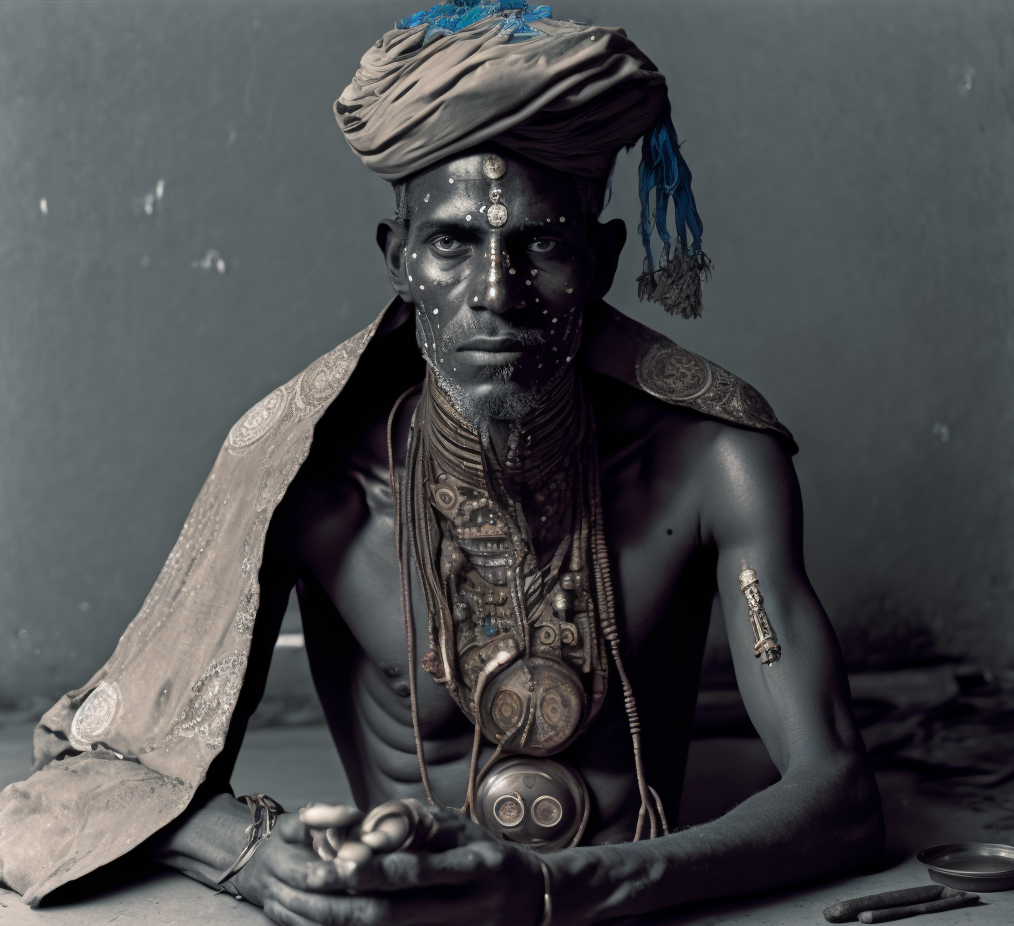
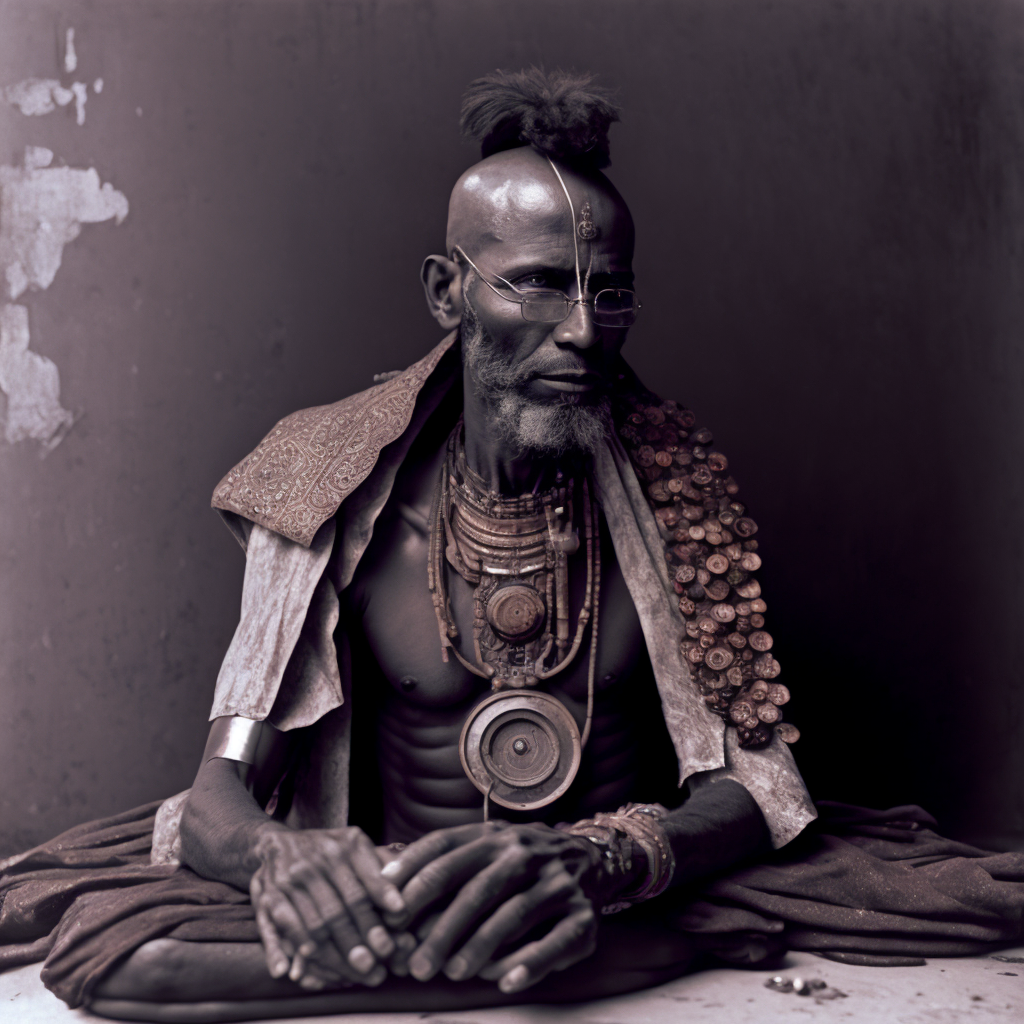
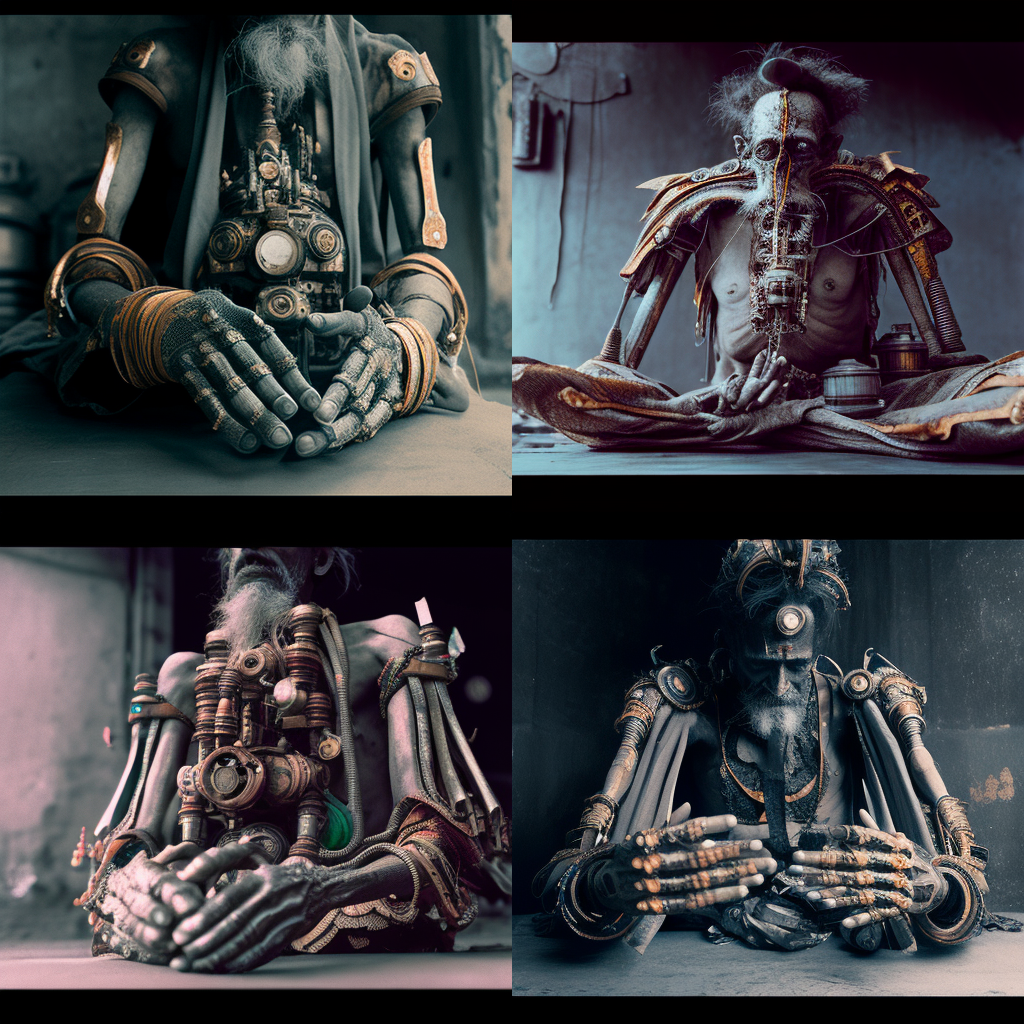
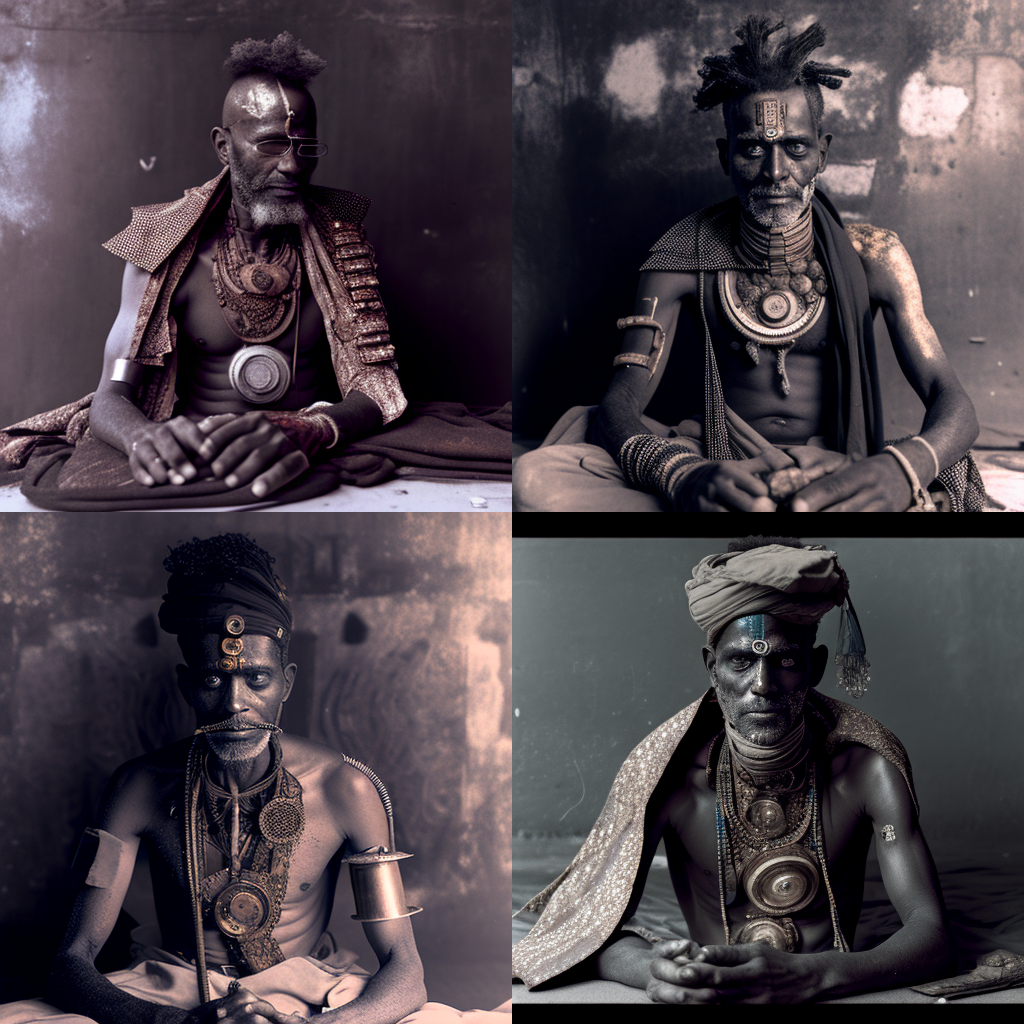
Beginning with a photograph made in rural Andhra Pradesh more than two decades ago, Hermit follows one figure through a generative model. The body persists as ornament, machinery, and cultural reference are recomposed. Authorship moves among the photographed encounter, the model, and the act of selection.
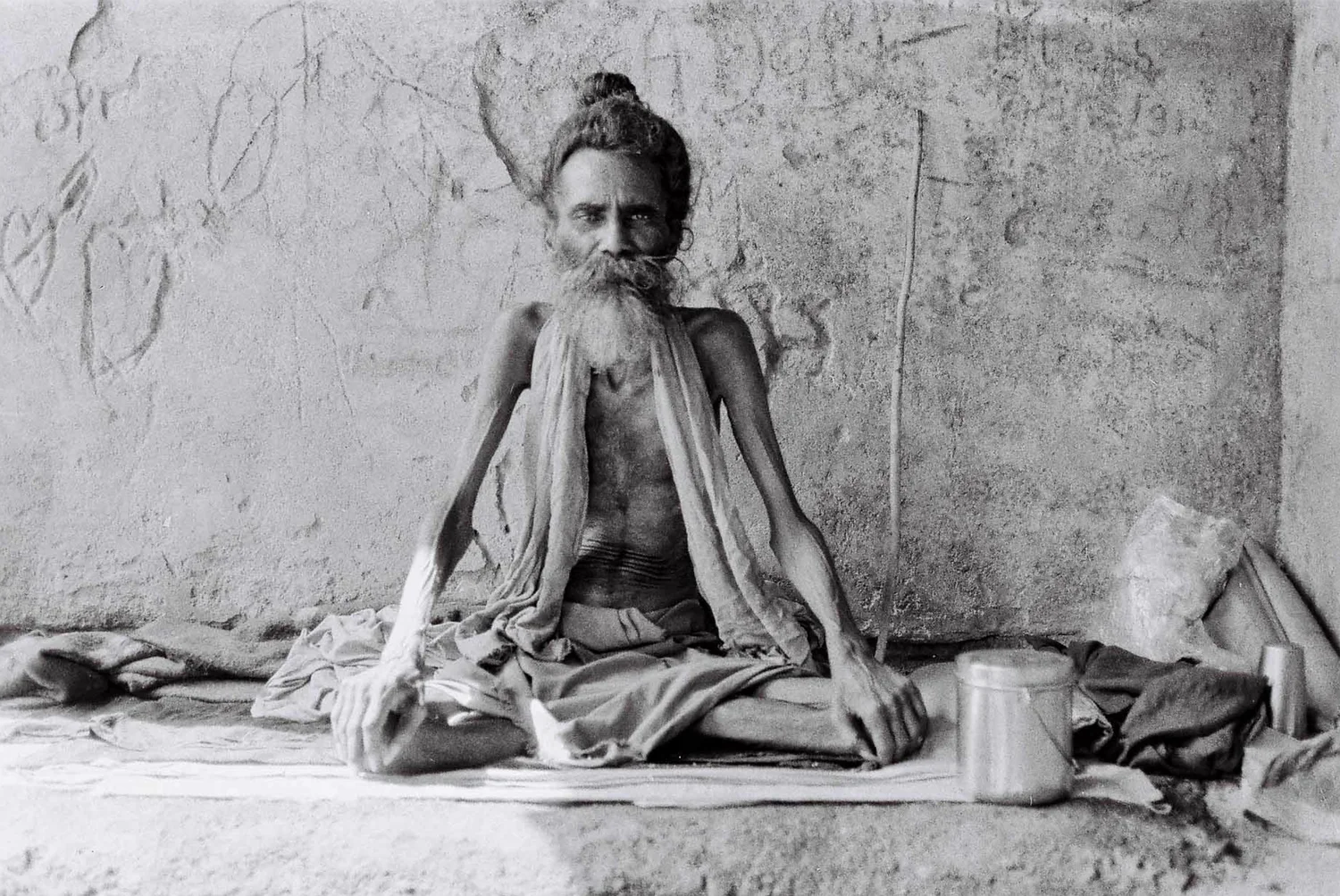
Andhra Pradesh, India. Made more than two decades ago while travelling by motorbike through a remote village.
An ongoing study / the body over time
From Lived Encounter to Simulacrum
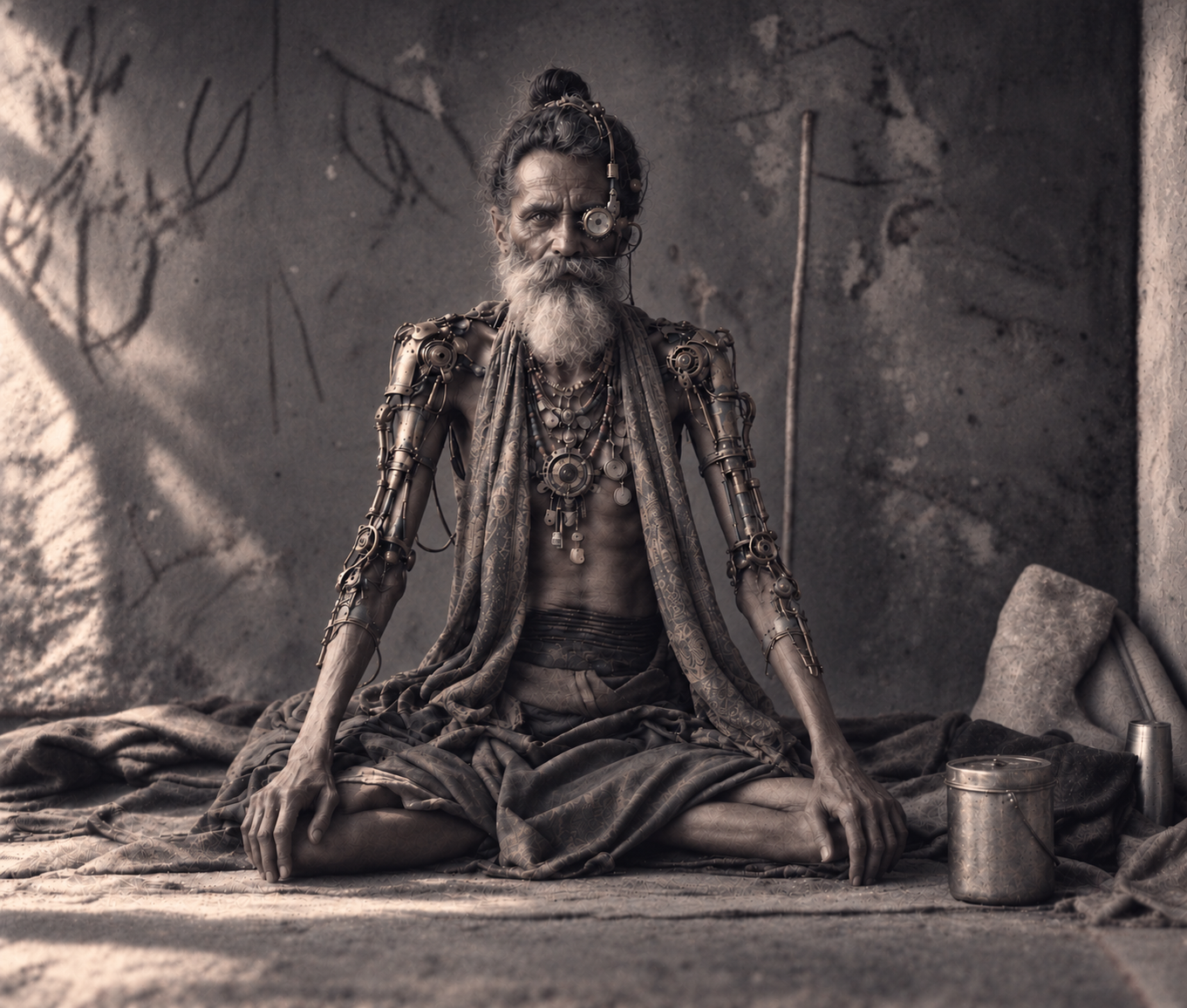
I keep coming back to the 2024 images. They feel closer to the man I photographed in Andhra Pradesh, and somehow more authentic to me. I can say that with some confidence and still have trouble saying why. With these models, so much of what happens between the prompt and the image is opaque. I know when something strikes me as tasteful, or when it just feels right. It’s much harder to say what the model did to get me there.
I almost want to call some of these images endearing, though I’d use that word carefully. A few go straight into body horror. Hands turn into things I can’t quite name. I wouldn’t have asked for that. But they came out of a particular moment in the life of these models, and I can’t go back to that moment. The oddness is part of what the images hold onto. They’re pictures of the Hermit, and in a way they’re pictures of the medium itself.
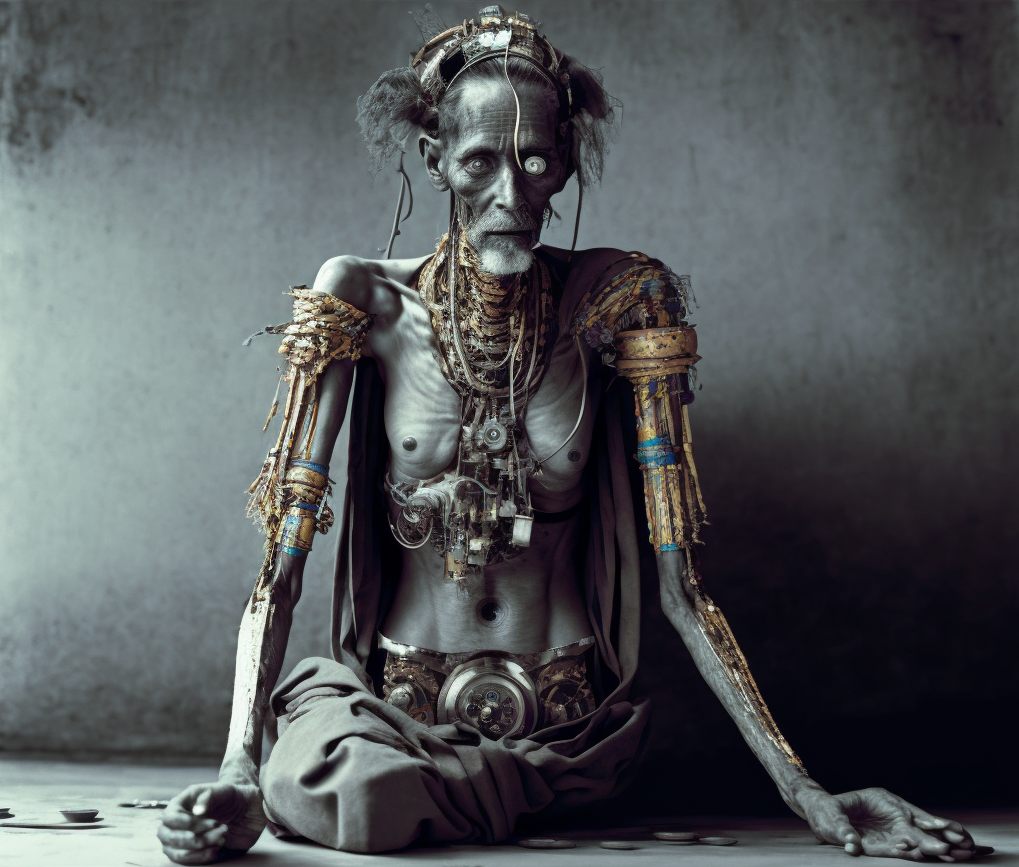
2026 / Second version
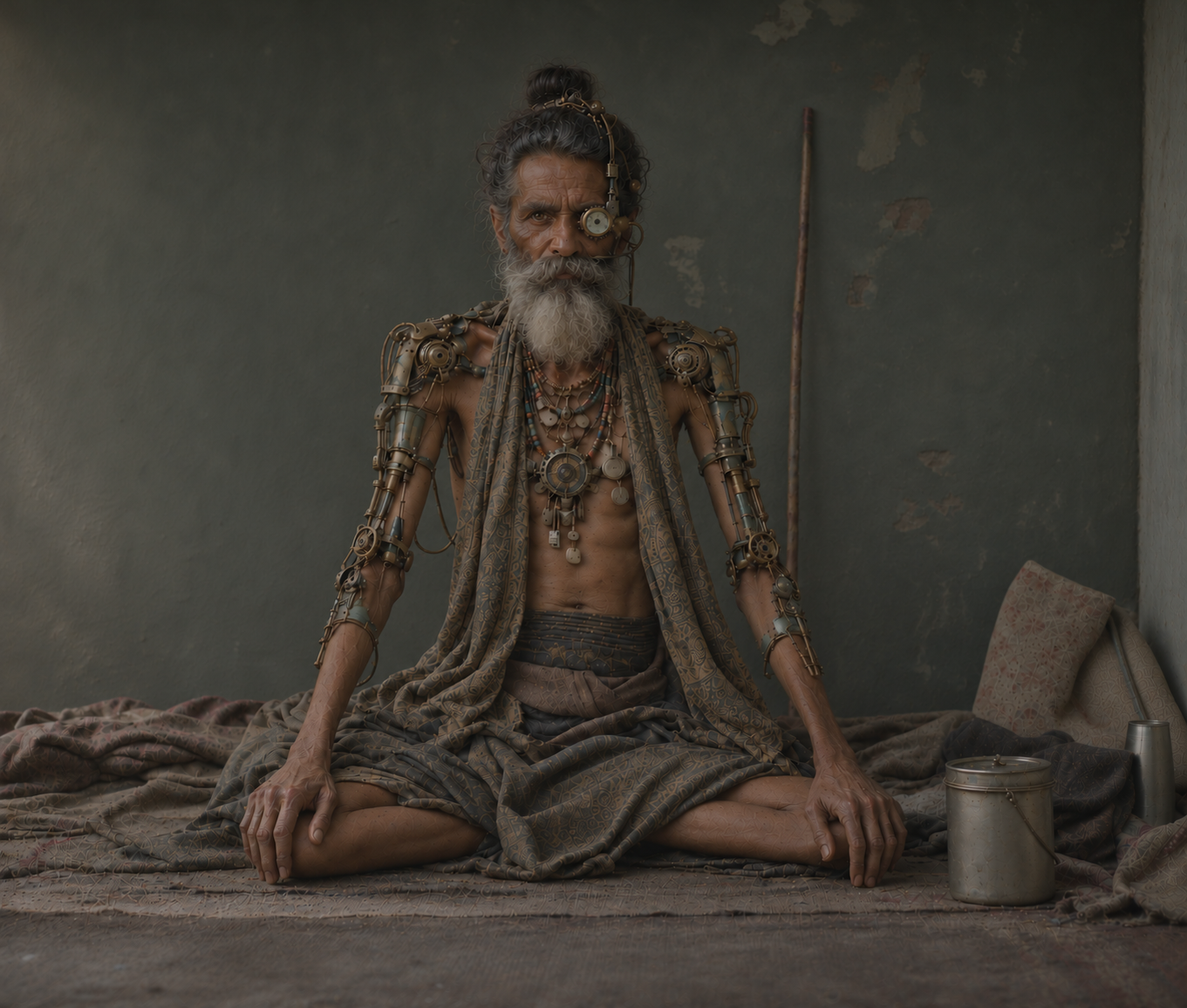
I notice the hands first. In the 2024 image I can’t quite work out where one finger ends and the next begins. In the 2026 image I can follow the fingers, the wrists, and the bits of hardware that sit over them. In the second version I took the exposure and contrast down. The brass catches less light, and the room feels a little more like somewhere you could sit.
And still, when I put them next to each other, the older image feels closer to the dark, austere atmosphere I remember from the original photograph. That’s what makes me think of Baudrillard’s simulacrum: I can make the image more convincing and still feel myself getting further from the encounter. I haven’t tried this with today’s diffusion models, and the prompts changed too. This is what I see in these particular images.
2024 series / Transformations / 7 images